
Shoreline Erosion on Smith Lake: Signs, Causes and Fixes
Shoreline erosion on Smith Lake rarely announces itself. A bank loses a little soil with each storm and each season of wakes until a tree tips, a corner of the yard slumps, or an old seawall starts to lean. This page covers the signs worth watching for on a Smith Lake lot, what wears lake banks down, and how Alabama Power's rules shape the fix, from leaving vegetation in place to riprap, seawall repair and the turtle-habitat method.
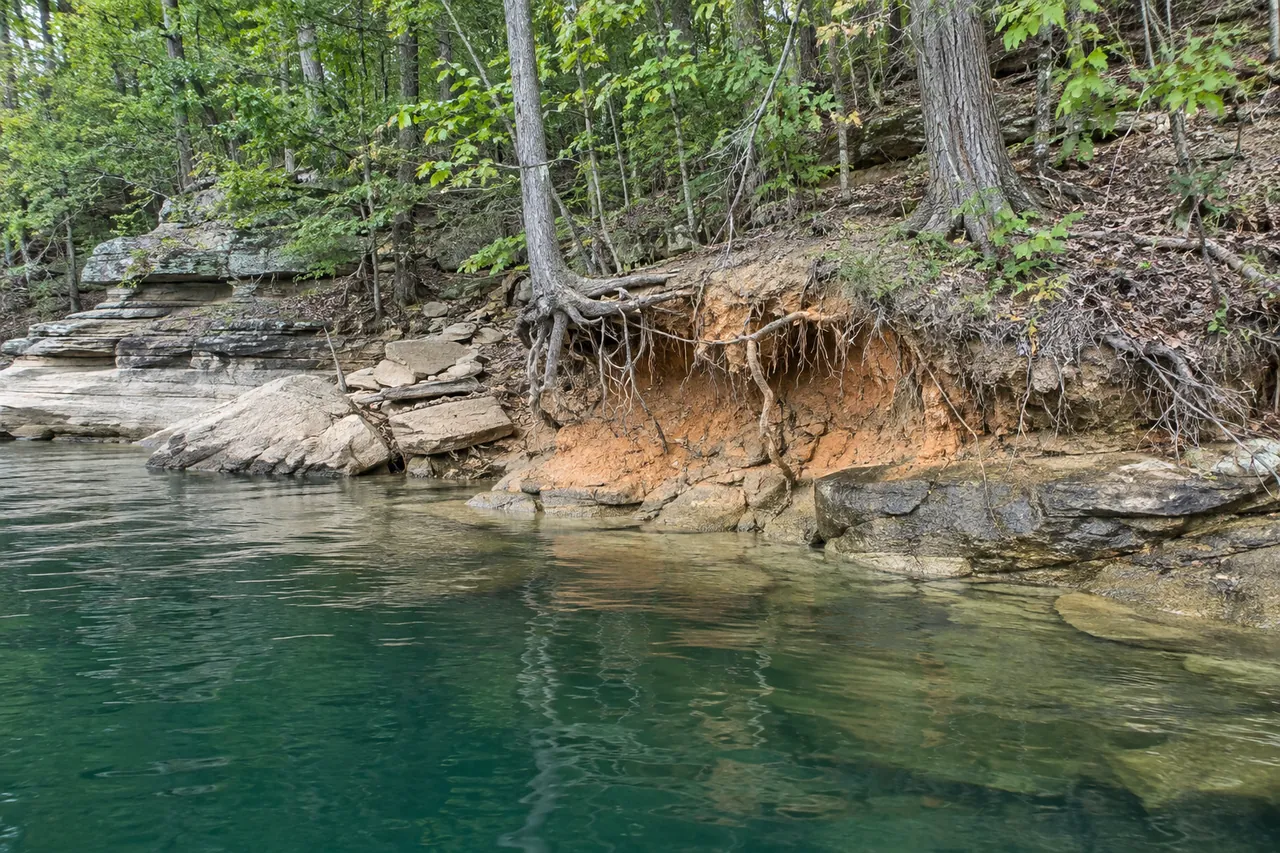
Signs your bank is eroding
- A cut face at the waterline. A short vertical drop of bare soil where the lawn or woods meet the water, often with an overhang above it.
- Exposed roots. Roots hanging in the air along the bank, or trees beginning to lean toward the lake.
- Muddy water along your shore after a rain or after boats pass, when the open water is clearer.
- Slumps. A section of bank that has dropped, cracked or slid down toward the water.
- Old riprap on the move. Stone that has rolled down the slope, or bare patches between rocks where soil is washing out.
- Trouble at a seawall. Holes opening in the yard behind it, a lean, or a scoured base. See seawalls.
Take dated photos at different lake levels. Erosion that only shows in winter, when the lake is drawn down, is easy to miss in July.
What wears Smith Lake banks down
Most bank loss on a reservoir comes from a handful of forces working together:
- Waves. Wind waves and boat wakes strike the bank at the waterline and pull loose soil back with them.
- A moving waterline. Alabama Power holds Smith Lake near 510 feet in summer and lowers it toward a winter pool near 496 feet, so waves work on a band of bank about 14 feet tall over the course of a year rather than one fixed line. See winter drawdown.
- Runoff from above. Rain running off roofs, driveways and bare yard toward the bank edge cuts gullies and carries soil into the lake.
- Lost cover. When trees, shrubs and groundcover near the water are cleared, there are fewer roots holding the bank together.
How Alabama Power ranks the fixes
Alabama Power's Smith Lake guidelines (revised July 15, 2025) set the order: "Rip-rap and natural bank stabilization are the preferred methods of erosion control; however, potential use of seawalls will be evaluated on a case-by-case basis." In practice that gives four routes:
Natural stabilization
Keeping and adding vegetation so roots hold the soil. It fits a gentle bank with surface wash more than a bank that's actively caving. Before clearing anything to replant, ask Alabama Power: its permits page says work in the lakebed and the flood easement, which runs up to 522 feet, could require a permit.
Riprap
Angular stone over a filter layer, with a buried toe, for a bank that waves are actively cutting. New riprap pays Alabama Power's $400 construction fee, and the Corps' programmatic permit applies too. The riprap guide covers it step by step.
Seawall repair or a new wall
Evaluated case by case, built as close to the existing shoreline as possible, and possibly with riprap required at its toe. See seawalls.
Enhanced natural stabilization (turtle habitat)
On shorelines identified as potential flattened musk turtle habitat, Alabama Power says residents with erosion issues "must use a more natural method to stabilize the shoreline": native rock in a set class mix, logs and native plants, built between November 1 and March 31. Its guide applies that method "where eroded bank exceed a 50 percent slope" and says "Do not remove existing vegetation." See turtle-habitat shorelines.
Choosing a fix for your bank
| What you see | Where to start |
|---|---|
| Gentle slope, some bare soil, no cut face | Keep what's growing; ask Alabama Power before clearing or planting near the water |
| A cut face or undercut bank that's growing each year | Riprap, after asking whether your shoreline is turtle habitat |
| A steep, eroded bank on an identified habitat shoreline | Enhanced natural stabilization, November 1 to March 31 |
| An existing seawall leaning or losing soil | A seawall repair, a riprap toe, or a rebuild, depending on the wall and on habitat status |
| Gullies running down from the yard | Deal with the runoff above the bank as well as the bank itself |
Every route that involves work in the lakebed or flood easement goes through Alabama Power first. The permit guide lists the fees and paperwork.
Before a contractor visits
- Measure, or estimate, how many feet of shoreline are affected.
- Gather dated photos, ideally some at winter pool and some at summer level.
- Find your deed and any Alabama Power permits already issued for the lot.
- Note how equipment could reach the shore: by barge, or over land through the yard.
- Call the Smith Lake Shoreline Management Office (205-384-7385) and ask whether your shoreline is identified turtle habitat.
Erosion questions
Will erosion stop on its own?
A bank that waves are actively cutting usually keeps losing ground until something protects the waterline. A gentle, well-vegetated slope may hold up for years with little more than care.
Do I need a permit to fix erosion?
For riprap, a seawall or other work in the lakebed or flood easement, yes. Alabama Power's permits page names only painting and pressure washing as work that doesn't need one.
Can I dump fill to rebuild a washed-out corner?
Not without approval. Alabama Power approves "the source and kind of backfill," backfill can only go to the contour of the natural slope, and "No debris or foreign materials may be used as backfill."
How this site helps
Call (205) 880-2401 or send a request, and we'll pass it to one independent local contractor who works on Smith Lake shorelines. Contractors are responsible for their own licensing, insurance, permits, pricing and warranties.
Related pages
Sources
- Alabama Power: Smith Lake residential shoreline guidelines (revised July 15, 2025)
- Alabama Power Shorelines: Permits
- Alabama Power: contractor's guide to enhanced natural stabilization
- Alabama Power Shorelines: permitting process and the flattened musk turtle (Sept. 15, 2022)
- Alabama Power Shorelines: Smith Lake drawdown notice (June 28, 2021)
- Alabama Power Shorelines: Smith Lake
Losing ground at the waterline?
Tell us what your bank is doing, and we'll pass it to one independent local contractor who works on Smith Lake.